IS CARTIER’S SIX-FIGURE NECKLACE: WORTH THE PRICE?
Posted on by Cameron Tewson
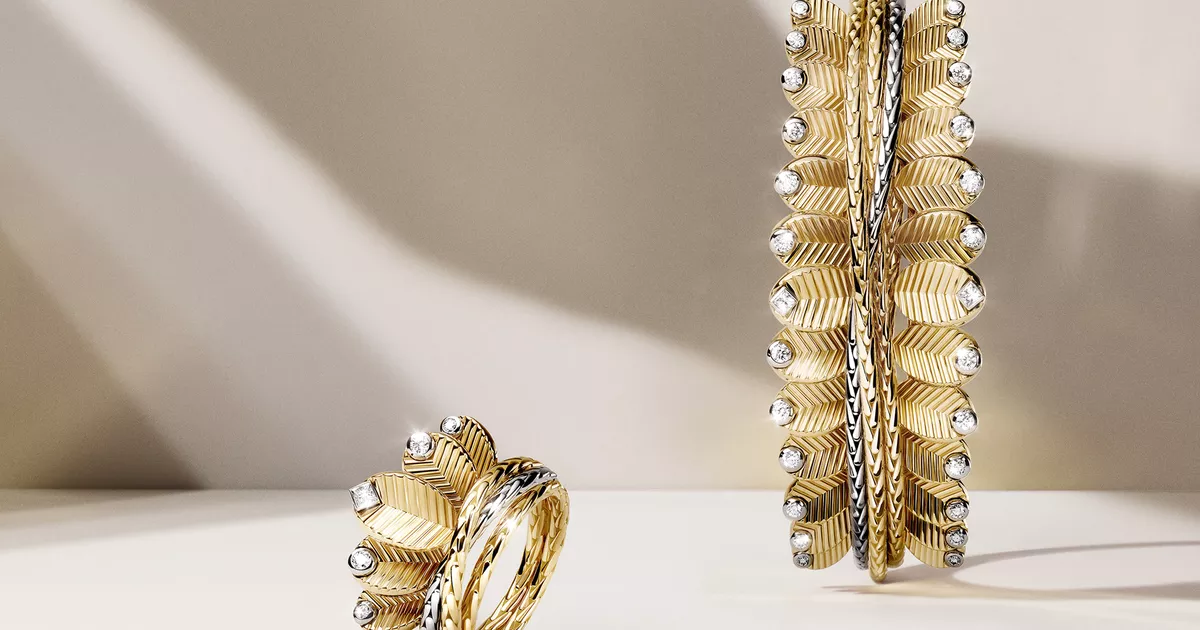
When a six-figure jewel is available with next-day delivery, how exclusive is it really?
There was a time when luxury whispered. Today, it refreshes its inventory online.
Click onto Harrods.com and among the usual suspects—latest Prada must-haves, La Mer creams, or the latest Intrecciato Bottega Veneta bag—you’ll find the Cartier Grain de Café necklace, a shimmering chain of yellow and white gold, studded with diamonds. Its price? £125,000. Or, if you prefer the American translation: just over $160,000.
It’s marketed as an homage to 1950s elegance, a nod to Grace Kelly, and a revival of a design motif based on coffee beans—yes, coffee beans. This is, Cartier tells us, luxury and with the warmth of the 18ct gold why wouldn’t we believe the marketing giant? But the truly astonishing thing isn’t the price. It’s the fact that this six-figure necklace is just… there. Online. Ready to buy. Click add to bag, and it’s yours. Presumably with free delivery we’d like to hope.
This is where the problem begins. Luxury, we are sold and told, is about rarity. Discretion. The invisible hand-stitched seam. The elusive waiting list. But when something so wildly expensive is also so readily available, the question becomes: what, exactly, are we paying for?
Consider the matching Grain de Café ring, also listed online. A neat, palm-sized complement to the necklace—yellow gold, diamonds, coffee bean motif once again. Price: £31,900. Not exactly a stocking filler, but also not unattainable for Cartier’s increasingly global clientele. And that, in itself, is telling. These pieces are not commissions. They are not one-offs. They are items of stock—beautiful, yes, but produced, photographed, and distributed like any other product in a luxury marketplace that’s no longer built on scarcity, but on scale.

Cartier is not alone in this shift. Most legacy houses—Hermès perhaps excluded—have embraced a kind of “luxury-lite” retail model. Jewellery collections are no longer best-kept secrets. They are content. Promoted via seasonal campaigns. Sold through e-commerce partners. Backed by inventory and designed for global movement. You don’t need a relationship with a jeweller anymore. Just a login and a limit-free credit card.
And that’s the paradox at the heart of today’s luxury market: it masquerades as exclusive, but functions like premium retail. While financially out of reach for most, it’s instantly accessible to anyone with the means—luxury by paywall, not by rarity. The launch of the Cartier Grain de Café collection has been widely covered by global fashion and lifestyle media, thanks in no small part to Cartier’s generous marketing spend ensuring top-tier visibility and editorial favour.
Cartier, to be fair, still makes truly bespoke pieces. The kind of high jewellery you’ll never see online. The kind where a single necklace may require thousands of hours of craftsmanship and will never be recreated. But that isn’t what retailers like Harrods, or Selfridges are selling. What’s being sold here is a fantasy: of heritage, of intimacy, of artistry. The Grain de Café collection is elegantly made, but also part of a broader product rollout—limited, perhaps, but not unique. You will not be the only one wearing it. You’ll just be the only one wearing that one.

What’s more, the very motif—the coffee bean—feels oddly trivial. Grace Kelly may have worn a brooch inspired by the design in 1955, but today’s rollout leans heavily on that distant connection as cultural validation. A bean motif reborn in 2025 doesn’t necessarily make you feel like a princess. It makes you feel like a participant in a well-branded nostalgia loop. We’ve entered the age of the “luxury middle class”: mass-available goods dressed up in exclusivity language, priced to feel rare, but made to sell. Cartier’s necklace is no less stunning because it’s on a website. But the fact that it is on a website—fully priced, fully stocked—undermines the entire mythology of one-of-a-kind craftsmanship.
Because true exclusivity doesn’t announce itself. It doesn’t live online. It’s discreet. It’s hard to find. It doesn’t come with a Klarna option.
The world of high jewellery used to be quiet. Today, it’s content. And when a price on application noted necklace can be added to your shopping cart like a designer coat or a skincare set, what we’re buying isn’t uniqueness. It’s the illusion of it.